Question :
The case examines and explores Tescos practices and states of operations management, operations designs and operations strategy. The company deals in the retail market and known to be one of the leading brands in the world. In case the strengths and weaknesses regard to its operations and in concern of its operations management are also revealed and analysed. Moving along, the whole case will be exploring the approaches and their effectiveness to Tesco for managing and bringing improvements in organisations operational functions and fulfilling its needs. Tesco is a lead firm in the market, it does have certain influence and impacts over the businesses in the industry and somehow even impacts over the industry by bringing varied changes in the market and developing new trends according to its sizes and functions. Thus, these all aspects are covered in the case and some recommendation at the end are referred as well.
- What are the approaches used by Tesco to become the market leader?
- What are some of the problems faced by Tesco for maintaining it leading status?
- What are some of the recommendation and improvement measure company can imply?
Answer :
This Tesco operations management case study shows how an international grocery leader plans, manages, and improves its operational practices to remain in its leading position in the market. Tesco known as the UK's leading firm provides a perfect operations management case study example due to the fact that almost all of the concepts of operations management can be seen in practice within one company under real competitive conditions.
Tesco: An Overview
Tesco is a firm operating since 1919 and headquartered in the United Kingdom. Tesco was established by Jack Cohen as a small retail corner shop and, over the years, has changed into one of the leading brands in the world in the retail sector. The company has expanded from operating in a single market stall based in London to being one of the major retail organizations in the world, having operations not only in the United Kingdom, but also in Ireland and some other areas of Central Europe. Tesco has an approximate share of 28% in the UK grocery market and leads its main competitors, including Sainsbury's, Asda, and Morrisons, hence becoming the clear winner of the "Big Four" in the UK market.
(Illustration 1: TESCO Plc., 2021)
The size of Tesco gives the company significant power over its suppliers and logistics providers; the operations strategy of the company has been centred on cost leadership based on the "Every Little Helps" approach, taking advantage of efficiencies to ensure that prices remain low without compromising on availability and service. Tesco is a brand that has been and still is part of varied or numerous markets around the globe, and it has gone through huge cut-throat competition in past years with a highly saturated market. The approach used by Tesco to survive is expansion, where the entity has moved into places by using its store business model to establish its presence in countries like China, Turkey, Poland, and others.
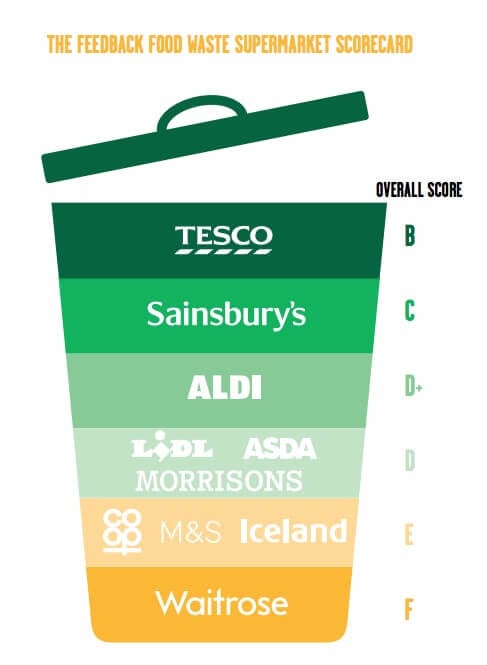
(Illustration 2: Tesco Ranked Top Supermarket for Food Waste Prevention, 2018)
Presently, Tesco operates in a number of potential markets around the world and wishes to continuously expand, grow, and diversify in order to remain competitive. Tesco follows a customer-centric approach to support its functional and business strategy, breaking many of the traditional rules of retailing in the process. In this Tesco case study analysis, standard methods have been applied by studying the operations of the company, benchmarking the findings against operations management theories, and carrying out a strengths and weaknesses analysis of the company in order to come up with recommendations.
(Illustration 3: CHINA: Tesco, China Resource Enterprise in JV talks, 2013)
Key Approaches Used by Tesco to Become the Market Leader
This dominance is not a matter of coincidence; it is the outcome of deliberate and carefully considered actions taken by Tesco over an extended period of time. The following approaches, discussed in the context of the operations strategy framework, are used by the company and serve as evidence.
Cost leadership through operational efficiency – The Tesco "Every Little Helps" approach is centred on cutting down operational costs within the organization, which ensures that savings are passed on to consumers in terms of lower prices. This is done through bulk purchasing, centralized distribution, and efficient store operation that does away with any wastage or duplication. Tesco, instead of just concentrating on competitive marketing, takes a view of business efficiency as its strength. Each process, from how the check-out counters operate to stocking the shelves, ensures a reduction in the cost per transaction.
Advanced supply chain network – Tesco has one of the most sophisticated systems of retail supply chain management in the retail industry. The firm has adopted a hub-and-spoke logistics system where its products pass through regional distribution centres before getting to specific stores, thus reducing costs of transport and keeping the lead time short. Tesco has combined a push and pull system of restocking, whereby the firm uses forecasted demand for its key products and reacts to actual demand for perishables.
Technology and data analytics investment – The Clubcard scheme, which was launched by Tesco in 1995, was among the first instances when the use of customer data had a significant impact in UK retail. The company has been using this information to customise offers and forecast demand much better compared to its competitors. In addition, Tesco is investing in RFID technology in retail, which will help to track stock movement across its warehouses and shops.
(Illustration 4: The Psychology of Shopping: the Tesco Clubcard, 2013)
The Clubcard was introduced as a CRM campaign with the broader agenda of regaining customer trust and staying competitive. In the process of running the Clubcard programme, Tesco also collected a large amount of personal customer data, which brought its own challenge: some customers grew wary of how their personal information was being used and stored, and this eroded a degree of trust even as the programme improved Tesco's targeting and forecasting. A more balanced approach, combining loyalty-card data with direct customer surveys, could have helped Tesco gather the same insight while addressing these privacy concerns more transparently.
Flexibility in operations design – According to the business strategy, the retail operations of Tesco are not designed to suit only one store format but are designed to cater to various types of customer demand. Tesco Express stores are designed for convenient shopping, Metro for urban areas, Superstore for full-week shopping, and Extra stores for hypermarkets. Thus, Tesco's operations strategy is able to cater to different shopping demands.
Effective supplier relationship and quality control – The company has formed solid relationships with its suppliers in terms of forecasting, packaging, and logistics on various occasions, thereby controlling costs as well as maintaining consistency in the products offered. This cooperation reflects the organization's approach to quality management in general, whereby branded and sourced products consistently meet customers' expectations.
You may also like to read: Background of Galaxy Chocolate - The Complete History
Problems Faced by Tesco in Maintaining Its Leading Status
Despite being a multinational company, Tesco's activities face pressures that pose risks to its market position, which are analyzed in the case study above. In this part, the strength and weakness approach is used to analyze the problems of the business.
Increasing competition from discount stores – Aldi and Lidl have consistently increased their combined market share in the UK to the high teens, with efficient business models that require fewer SKUs, simpler store layouts, and lower costs than the Tesco business model. This has left Tesco in a weaker position on price competition.
Perception around the low-price strategy – Tesco's low-price policy, while successful overall, does not resonate equally across all market segments. Some customers associate low prices with lower quality, assuming that products sold cheaply must involve some compromise, which creates a brand-perception challenge that pure cost leadership does not solve on its own.
Legacy of Tesco's superstores – The historical policy of building huge superstores in out-of-town locations became a liability as shopping trends started shifting to "little and often." Running large-format stores in a market moving toward more convenient shopping methods has become inefficient in terms of cost compared to competitors with smaller-format stores.
Reputation and governance issues – Tesco has encountered problems that affected its operations in light of earlier scandals, namely the contamination of its food products with horsemeat in 2013 and the accounting scandal regarding overstated profits in 2014. Such events pointed out weaknesses in supplier management and operational control. Data-privacy concerns tied to the Clubcard programme add a further dimension to this governance challenge.
Pressures of inventory and shelf availability – Despite technological advancement, inventory management across many SKUs and a large store network remains a real challenge, involving stock-outs, perishable surplus, and poor demand forecasting during spikes (bad weather, disruptions in the supply chain).
Rising costs of inputs and labor – The inflation effects on food, energy, and wages, heightened further by post-Brexit difficulties in customs and labour supply, have raised Tesco's cost structure faster than it can raise prices among price-sensitive customers.
Recommendations and Improvement Measures Tesco Can Implement
Based on the Tesco operations management case study analysis above, the following are recommendations achievable through Tesco's strengths and weaknesses.
Foster a continuous improvement culture – Applying continuous improvement methods in a structured manner (Lean, Kaizen) would help Tesco reduce waste and shorten process times by having its store and distribution centre workers identify wasteful practices themselves, rather than relying solely on top-down cost-cutting programmes. This Continuous Improvement Approach (CIA) revolves around ongoing improvement and improvisation in Tesco's products, services, and operations.
Invest in employee training and education – Employees are key to a firm's success, and Tesco can become more productive and impactful by keeping its people educated and continually upskilled, particularly given how quickly the retail environment and its operational processes are changing.
Related Service: Case Study Help
Improve RFID and stock tracking – Expanding RFID technology across all store formats, not only flagship stores, will make inventory management more accurate, reduce stock-outs, and cut the costs involved in physical counts, directly addressing one of Tesco's operational pain points.
Increase spending on flexible, responsive supply chain systems – Enhancing forecasting tools through AI-driven demand sensing will help Tesco respond to demand changes much faster, ensuring minimal waste or missed sales, an improvement on the pull-based elements currently built into its supply chain. This also supports Tesco's sustainability goals.
Portfolio optimization – Downscaling less successful larger-format stores in favour of smaller formats, in line with current shopping trends, would better match Tesco's operations strategy and free up capital for investment in digital fulfilment systems.
Improve oversight and quality control for suppliers – Strengthening auditing and traceability across the supply chain, using lessons learned from past incidents, will improve quality management procedures and protect brand integrity, since reputational damage spreads quickly.
These critical steps can bring meaningful change within Tesco's operations while addressing the defects and problems the company currently faces.
You may also like: Tesco Organisational Structure - Overview and Hierarchy
Conclusion
The present Tesco operations management case study highlights the fact that the company leads the pack as the top UK grocery retailer due to its consistent and coherent combination of cost leadership, supply chain management, diverse store formats, and investment in technology and data. At the same time, Tesco faces the challenge of being under consistent and real pressure from discount-store competition and shifting shopping habits. Although these issues are covered above in detail, you can use the Summary Generator tool available at Global Assignment Help to get a brief summary of the case.

UPTO56%
Avail The Benefit Today!
To View this & another 50000+ free








 Whatsapp
 Call
Call  Email
Email 








 Update your Number