
Table of Contents
- What Is Communication in Health and Social Care?
- Why Is Effective Communication Important in Health and Social Care?
- Types of Communication in Health and Social Care
- Understanding Communication Models in Care Practice
- Barriers to Effective Communication in Health and Social Care
- How to Promote Effective Communication in Health and Social Care?
- Conclusion: Effective Communication in Health and Social Care
- Frequently Asked Questions
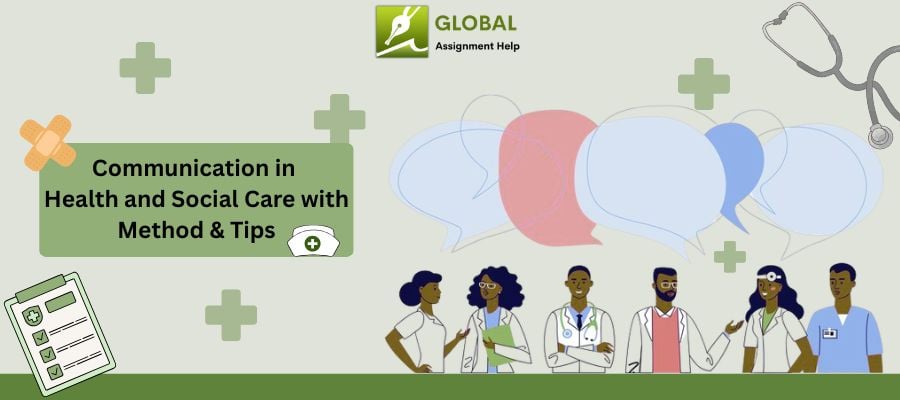
The World Health Organisation highlighted that the relationship between patients and healthcare professionals has transformed. Now, patients seek more than just treatment; they look for a compassionate listener to support them through challenging and complex situations. In this scenario, proper communication in health and social care becomes truly vital. It ensures patients feel secure and supported emotionally, thus fostering trust and confidence. So, for anyone working in health and social care, developing strong communication skills is the heart of delivering care that truly makes a difference.
What Is Communication in Health and Social Care?
Effective communication in health and social care refers to the clear exchange of information between care workers, patients, families, and other professionals involved in care. It includes verbal, non-verbal, written, or visual, and helps make needs clear and decisions easier. Good communication skills help workers support patients emotionally and protect their privacy. In places like hospitals, GP clinics, dental offices, nursing homes, and social care centres, clear and effective communication plays a big role in ensuring patients get the best care possible.
Why Is Effective Communication Important in Health and Social Care?
In social and health care, how we share and receive messages can make all the difference. Patients respond in a better way when staff explain things clearly and make their concerns a top priority. Thoughtful communication builds trust, eases worries and helps families feel included. Here is why communication is vital:
- Better Patient Experience: When people feel heard, they are calmer and more confident in their care.
- Fewer Errors: Clear communication lessens errors with medications, treatments or personal support.
- Person-Centred Care: Understanding each individual's needs allows staff to offer care that really fits.
- Meeting Care Standards: Strong communication ensures services meet safety and quality standards, such as those set by the CQC.
Also Read - Argyle’s Communication Cycle: Stages, Model and Theory
Types of Communication in Health and Social Care
There are different types of communication in health and social care. These include verbal, non-verbal, written and visual communication.
Verbal Communication
Verbal communication is the most common method to share information. Examples of verbal communication in health and social care include using words that are clear, simple, and easy to understand. Speaking too fast, using complicated terms, or including jargon can confuse the listener. Rather than adjusting your language on the basis of the person you are talking to, make sure your message is easy to follow. Good communication also involves paying attention to tone and clarity so that the listener feels understood and comfortable asking questions if needed. This helps build trust and ensures details are shared accurately.
Non-verbal Communication
Non-verbal communication in healthcare includes body language, facial expressions, and gestures. These often say more than words alone. It is vital to notice both your own non-verbal signals and those of others to communicate effectively. So, being aware of these cues helps you understand feelings and intentions that might not happen.
Written Communication
The written communication in health and social care includes notes, emails, letters and reports. In speaking, clarity and simplicity are important, but in writing, grammar, punctuation, and accuracy are even more crucial. Here, one mistake can cause confusion or misinterpretation. To reduce errors, review your writing carefully and use tools like Grammarly when required. Thus, clear and correct writing ensures your message is understood exactly as intended.
Visual Communication
Visual communication uses tools, such as charts, graphs, and diagrams, to share details quickly and clearly. The goal is to make complex ideas easy to grasp at a glance. If a visual is cluttered, it won’t help anyone, so keep it simple and focused. So think of yourself as the guide, the visual highlights the key points, giving the reader a quick overview while supporting deeper knowledge. A well-designed graphic makes learning faster, clearer and more memorable. If you are struggling to understand communication models, you may consider seeking guidance from professional assignment help services for further guidance and to enhance your soft skills.
Understanding Communication Models in Care Practice
There are several communication methods, like Berlo’s SMCR model and Argyle’s communication cycle. In the table below, you will explore how both are different from each other and why they offer a unique perspective.
|
Feature |
Argyle’s Communication Cycle |
Berlo’s SMCR Model |
|
Focus |
Communication as a continuous cycle: idea → message → sender → receiver → feedback → understanding |
Communication as Sender → Message → Channel → Receiver, emphasising the skills, attitudes, and knowledge of the sender/receiver |
|
Feedback |
An integral part of the cycle, it ensures the message is understood correctly |
Not explicitly emphasised; assumes effective encoding/decoding |
|
Complexity |
Linear steps with explicit feedback, suitable for iterative clarification |
More theoretical; emphasises personal characteristics affecting communication |
|
Strengths |
Highlights continuous feedback, reduces misunderstandings, simple to apply |
Emphasises sender/receiver skills and message design, helps identify gaps in understanding |
|
Limitations |
Less focus on individual traits or message quality |
Doesn’t explicitly model feedback or iterative clarification |
Barriers to Effective Communication in Health and Social Care
Communication in healthcare can sometimes be affected by different challenges. These barriers may prevent a clear understanding among patients, families, and caregivers, which can affect the quality and safety of care. Thus, identifying barriers in communication helps professionals adjust their approach and ensures the details are shared clearly and respectfully. These are as follows:
- Language Differences: When patients and staff speak different languages, misunderstandings can occur.
- Cultural Differences: Beliefs, values and customs may influence how messages are interpreted.
- Emotional Barriers: Stress, anxiety, or fear can make it difficult for individuals to process information.
- Physical Barriers: Hearing loss or certain disabilities may affect communication.
- Difficult Jargon: Complex medical terms can confuse patients if not explained simply. Students who find medical terminology difficult can also seek support from English assignment helpservices for better usage of terms as per the time and condition.
- Environmental Factors: Noise, lack of privacy, or busy settings can interrupt clear conversations.
How to Promote Effective Communication in Health and Social Care?
Promoting effective communication in health and social care requires a proactive approach.
Use of Technology
Technology can support clear and direct communication, and tools like electronic health records, translation apps, video consultations, and communication aids ensure information is shared accurately. Assistive devices also support individuals with speech or visual difficulties.
Training and Development
Regular training helps medical staff to strengthen communication skills.Workshops, role-play sessions, and guidance from nursing assignment helpexperts can strengthen communication skills. Ongoing learning ensures staff are confident and ready to communicate with people from diverse backgrounds and with varied needs.
Encouragement of Feedback
Feedback gives a chance to improve continuously, and staff should encourage patients and families to ask questions and share concerns. Likewise, workers should feel absolute comfort giving and receiving constructive feedback to prevent misunderstandings and thus improve teamwork.
Cultural Competence
Understanding cultural differences is crucial in care delivery, and staff should respect different beliefs, traditions, and communication styles. Developing cultural awareness helps avoid misunderstanding and ensures that care remains inclusive and respectful.
Using Simple Language
Clear and simple language reduces language barriers and confusion. So avoid jargon s unless it is completely explained. Based on a person’s age, literacy level, and communication style, you must adjust your communication style to deliver a clear and effective message.
Establishing Trust
Trust is the foundation for proper communication, so being honest, consistent, and respectful helps patients feel safe and valued. And when trust is settled, then individuals are more likely to share vital details, and that improves the quality of care.
You can also check out our latest blog on: LEAPS Model of Communication.
Conclusion: Effective Communication in Health and Social Care
Communication in healthcare is more than exchanging information, it is the foundation of safe and person-centred care.; it is the foundation of safe, respectful, and person-centred practice. From visual methods to verbal and non-verbal interactions, every form of communication shapes the patient experience. When professionals communicate clearly, listen actively, and respond with empathy, they build trust and reduce the risk of errors. Having better knowledge of communication models, recognising barriers, and promoting continuous improvement through training and feedback all strengthen care delivery. If you are a student and looking for systemic learning, then you can take help from Global Assignment Help.com for more clarity, as strong communication skills empower healthcare workers to provide compassionate support and ensure that every individual feels heard, valued, and understood.
Place Your OrderFrequently Asked Questions
Q1.What are the 7 C’s of Communication in Health and Social Care?
The 7 C’S are as follows:
- Clear
- Concise
- Concrete
- Correct
- Coherent
- Complete
- Courteous
These 7 C’s guide social care workers to deliver messages properly and ensure patient safety.
Q2.What are the Main Barriers To Communication In Health And Social Care?
The following are the key barriers with respect to communication in health and social care, and recognising them helps improve communication:
- Language differences
- Cultural gaps
- Hearing impairments
- Emotional stress
- Use of jargon
- Environment noise
- Time limit
Q3.How Does Effective Communication Improve Patient Outcomes?
Effective communication boosts trust, understanding and cooperation between caregivers and patients. It lowers the risks of errors and motivates patients to engage actively during treatments. Moreover, it also enhances the willpower of the patients during their hard times.
Q4.What Skills Are Essential For Effective Communication In Health And Social Care?
Prominent skills are active listening, empathy, clear verbal and non-verbal expression, cultural awareness and the ability to give and receive constructive feedback, ensuring person-centred and respectful care. These build trust and strengthen professional relationships, and lastly, collaboration within teams. And also support a better understanding of individual needs, which leads to safer and more effective care outcomes.
Free Tools

Easy to Use Paraphrasing Tool to Simplify Complex Academic Writing
Check Now


Get Structured Outline by Professionals for Your Dissertation
Check Now
Effortlessly manage citations and references with our smart referencing tool
Check Now







- Plagiarism
- Pricing
- Order Now
- Call Back
- Live Chat
 Whatsapp
 Call
Call  Email
Email 




Limited Time Offer
Exclusive Library Membership + Free 300$ Wallet Balance




Get $300 Now
 Update your Number


Thank you for submitting your comment on this blog. It is under approval. We will carefully review your submission and post it on the website.