

Table of Contents
- What Is the Transactional Model of Communication?
- Key Components of Transactional Model of Communication
- Some Examples of Transactional Model of Communication
- Transactional Model Vs Other Communication Models
- What Are the Advantages and Disadvantages of Transactional Model of Communication?
- Best Practices for Transaction Model
- Final Thoughts
- Freaquently Asked Questions
Do you think communication is only about talking and listening? Well, if yes, then you are missing half the picture. It's not just a course of action that includes the exchange of words, but also about how we connect and respond to others. There are distinct and vast amounts of communication used for facilitating communication. Some of the models involve mainly one-way communication, while others allow both parties to participate on a turn-by-turn basis.
But reality hits different. Will these ways of communication be sufficient in this evolving world? Not quite enough would be right. In real life, everything from emotions to speaking all occurs at once, and that's where the transactional communication model takes an important place. It reflects how you communicate, especially in a workplace. This blog is going to be pretty long, so sit back & relax, as this blog will be covering almost everything about the specific model.
What Is the Transactional Model of Communication?
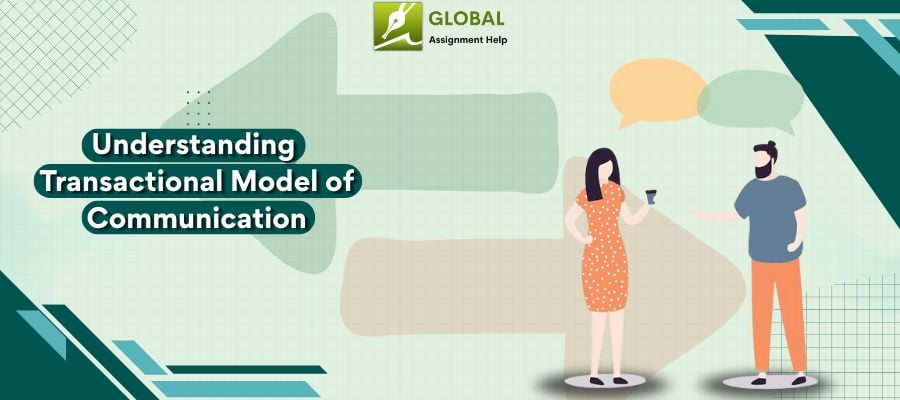
This section of the blog explains the question, “What is the transactional model of communication?” As communication methods have evolved over the years, the transactional model has emerged as a modern way of interaction. It views communication as a two-way process in which both participants, known as the sender and receiver, exchange messages simultaneously. Unlike traditional one-way approaches, this model considers communication a dynamic, continuous, and reciprocal process where individuals are constantly sending and receiving information. Similar to frameworks such as the LEAPS model of communication, it highlights the importance of active engagement, context, and nonverbal cues in creating meaningful understanding. This makes communication a collaborative exchange rather than a simple transfer of information, which is why it is highly valuable in business settings. Overall, this can be considered a concise transactional model of communication summary. Next, you will learn about its key components.
Key Components of Transactional Model of Communication
This model is beyond simple conversation and delivery of messages by making the conversation simultaneous. It helps shape the communication with context, feedback and shared understanding. Below, for you, the definition of major components that make communication flow better is given:
- Communicators: Also known as senders and receivers, are people who are delivering the message and interpreting the message, respectively. However, during real-life conversations, both people switch roles, which makes communication a back-and-forth process.
- Message: It is the information, feeling, or thought that the sender wants to share with the receiver. Moreover, it can be molded by context and emotions. It can be facial expressions, spoken words, gestures and everything that carries meaning in order to exchange messages.
- Feedback: Nods, replies, questions, and even silence give meaning. It is the reaction that the recipient provides to the sender. Real-time feedback allows people to adjust their messages based on how others respond. Therefore, it makes communication more interactive.
- Noise: Noises are disruptions that can hinder communication, including physical distractions, psychological stress, or unclear language. These noises arise because of a lack of clear feedback or contextual misalignment. Although it can distract, for successful communication, stay focused.
- Encoding & Decoding: Encoding is the process of turning senders' views into a message, whereas decoding is the receiver's process of clarifying and making sense out of that message.
Some Examples of Transactional Model of Communication
Without knowing, while communicating, you might be using the transactional communication model almost every day. Which is why you should learn about them via examples so that you can teach others as well about the model. Given below are some transactional model of communication examples that showcase how this model works in various contexts:
Face-to-Face Communications
While holding a face-to-face communication, both participants send and receive them continuously. Verbal communication is sometimes supplemented by non-verbal communication such as body language, facial expressions and style of voice. For example, when you meet with your friends over coffee and chat, there will be someone who will be constantly adjusting their messages based on each other's reactions, whether a simple, questioning look or just a nod.
Video Conference Calls
In the age of remote work, there has to be some way to communicate properly with almost no latency. Here come the apps that are developed to provide quick options to connect and communicate with faraway employees. Moreover, during a video call, for example, in some cases one team member may present an idea while others provide non-verbal feedback like nodding and frowning or even verbal input like "Can you clarify that?". The presenter can adapt the suggestions, creating a fluid, real-time exchange of ideas.
Text Messaging
In text messages, you cannot see the face of the other communicator, and it lacks the richness of non-verbal cues; still, it follows the principle of communication. When you send a message, the recipient responds, and the conversation evolves based on their response. The conversation is built continuously based on the feedback from both participants.
Some examples of transactional communication model include emails, letters, business presentations and social media interactions. If used properly and leveraged to all its properties, the model will help hold conversations where you can leave a powerful impact. Also, there are many more transactional model of communication examples that you can learn about by searching the internet.
Transactional Model Vs Other Communication Models
You might be wondering if there were other communication models, what’s the use of the transactional model? Well, the reason is that the model is a more convenient approach, which is not possible with others. To learn more about it, read the table given below:
|
Communication Model |
Significance |
Usage |
Examples |
|
Linear Model |
Believes in one-way communication without any feedback |
A sender transmits a message, and the receiver only listens |
Listening to TV news that is live |
|
Interactive Model |
Two-way communication follows a turn-based system. |
The receiver listens and only replies once they get chance. |
Text messages or emails |
|
Transactional Model |
Thinks about communication should be in real-time and should be two-way. |
Both the sender and receiver can participate in communication. |
Virtual calls or face-to-face conversations |
The comparison above shows how the transactional model is effective in terms of effective communication. Therefore, it is the reason why the modern world includes the model almost every day. There’s also the transactional analysis model of communication developed by Eric Berne. It explains communication based on people’s internal states and interactions. To learn more, read online about it.
What Are the Advantages and Disadvantages of Transactional Model of Communication?
Whatever communication model you use, will have its both advantages & disadvantages and for you understand them given below are some of them given:
Advantages:
Enhances Teamwork: By using this model, everyone gets the freedom to speak, listen and respond at once. It often leads to enhance teamwork as everyone is free to share their opinion.
Two-Way Interaction: The model makes communication feel more dynamic and interactive. With it, both parties send and receive messages simultaneously, leading to improved understanding.
Recognises Context: The model has the ability to differentiate between physical, psychological, social, cultural contexts, and noises. It can acknowledge noises and emotional states that can affect communication.
Disadvantages:
Too Complicated: Its complexity makes it difficult to follow easily in real-time, fast-paced or chaotic conversations with a lot of feedback.
Distinct Communication Types: This type of model always becomes problematic for people who come from different backgrounds. Some communicators prefer direct speech, while some focus on non-verbal cues.
Noise Identification Issues: In this model of communication, it is difficult to decide where communication breaks down since noise can come from anywhere.
So these were the advantages and disadvantages of the transactional communication model. Next, you will learn about the best practice for the transactional model. If you have an academic project related to such models and want to craft professional answers, try using the assignment helper services.
Best Practices for Transaction Model
After you read about the transactional model of communication and learn from the examples, to get the most out of it, consider the following best practices:
- Practice active listen: In a transactional communication engagement, the key is the key. Listen actively to what the others speak, pay attention to both their verbal and non-verbal hints.
- Provide & Encourage Feedback: Try to give immediate and respectful feedback. Make a habit to ask questions that can clarify your doubts to ensure you understand most of the things.
- Adapt to Context: Consider cultural, social, emotional, and the physical environments. As per the audience and environment, adjust language, tone, and style.
- Be aware of non-verbal signals: Sometimes non-verbal communication speaks louder than words. While communicating, pay attention to the tone of voice, body language, and facial gestures, as they can convey and influence the messages.
- Show Empathy & Respect: Acknowledge others' feelings and viewpoints. Moreover, respond thoughtfully rather than being defensive. If you write something professional and business-related and want to avoid unwanted plagiarism and improve clarity, try using a paraphrasing tool free service.
Final Thoughts
For effective communication to take place, you need to adopt a communication model, and what can be better than the transactional communication model, which can unlock the full potential of communicators who use that method. Furthermore, it can improve clarity and foster deeper connections in both personal and professional settings. After exploration of this blog, it is clear about how important the transactional model is in everyday communication. In daily life, how you communicate truly makes a huge difference. By implementing this model, you can make an interactive approach, and you can reduce misunderstanding. Moreover, if you are trying to improve your communication or use them in academic work, try to use communication assignment help services. Ultimately, it depends on you whether you want to use the model or not, and feel free to revisit it to freshen up memories about the communication model.
Get help With Us!Freaquently Asked Questions
Q1. What Is Meant by the Transactional Model?
Ans:- The transactional model of communication summary can be described as dynamic, simultaneous two-way interactions, views participants as both senders and receivers at once, unlike the older linear models that see one-way message flow.
Q2. What Does it Mean that Communication Is Just a Transactional Process?
Ans:- In accordance with the communication theory, communication is a transitional process, meaning it is a dynamic, continuous, and simultaneous exchange where its mean is co-created instead of just sending and receiving.
Q3. Who Is the Creator of the Transactional Model of Communication?
Ans:- It was a model developed in 1970 to discuss the shortcomings of previous linear and interactional communication model by Dean Burnlund
Q4. What Is the Focus of Transactional Model?
Ans:- It believes communication is an ongoing two-way process in which all participants continuously react, making it vital for a business setting. According to the transactional model of communication theory, effective communication involves actively listening, adapting to real-time responses, and fostering collaboration.
Free Tools

Easy to Use Paraphrasing Tool to Simplify Complex Academic Writing
Check Now


Get Structured Outline by Professionals for Your Dissertation
Check Now
Effortlessly manage citations and references with our smart referencing tool
Check NowWant to Hire a Writer to Solve Your Academic Worries?


About
After finishing my graduation in law estate management, I started assisting students on this subject and have helped them out in submitting well-written academic documents. Moreover, with time I have guided them to achieve the academic growth and polish their knowledge in this subject. Till now, I have covered topics such as Anglo-American theory, property rights and personal rights, Classification of Possession, etc. I can support students in writing dissertations, case studies, essays, assignments and research papers related to topics on law estate management.
Subjects
Anglo-American theory
Property rights and rights to people
Property rights and personal rights
Classification of Possession







- Plagiarism
- Pricing
- Order Now
- Call Back
- Live Chat
 Whatsapp
 Call
Call  Email
Email 



Limited Time Offer
Exclusive Library Membership + Free 300$ Wallet Balance




Get $300 Now
 Update your Number


Thank you for submitting your comment on this blog. It is under approval. We will carefully review your submission and post it on the website.